R3 will soon be open-sourcing Corda. Here’s what to expect.
As I confirmed a few months back, R3’s Corda platform will be open-sourced, under the Apache 2 licence, on November 30.
Corda is a distributed ledger platform designed and built from the ground up for the recording and automation of legal agreements between identifiable parties. It is heavily influenced by the requirements of the financial industry but we believe the community will find the underlying architecture will lend itself to a broad range of applications.
We’ve built Corda because we see requirements – especially in finance – that need a distributed ledger but which cannot be met by existing platforms.
- Corda is the only Distributed Ledger platform designed by the world’s largest financial institutions to manage legal agreements on an automatable and enforceable basis.
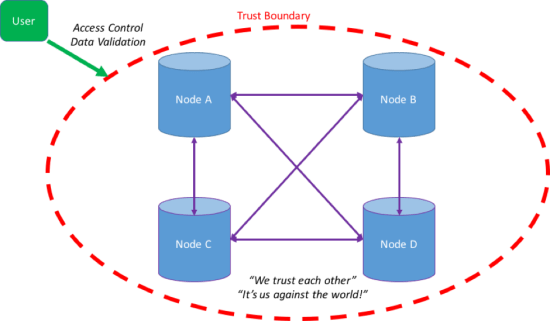
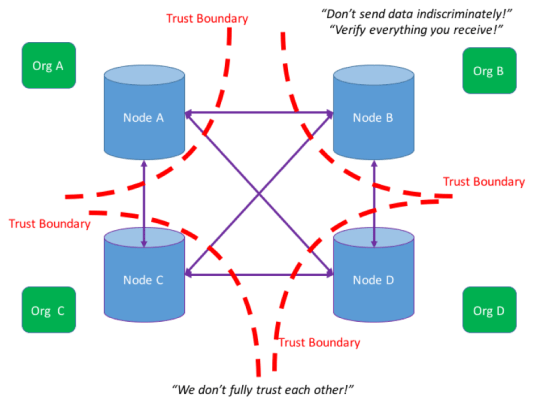
- Corda only shares data with those with a need to view or validate it; there is no global broadcasting of data across the network.
- Corda is the only Distributed Ledger platform to support multiple consensus providers employing different consensus algorithms on the same network, enabling compliance with local regulations.
- Corda is designed to provide a great developer experience and to make integration and interoperability easy: query the ledger with SQL, join to external databases, perform bulk imports, and code contracts in a range of modern, standard languages.
We designed it with the members of R3, the world’s largest financial services DLT consortium, but we think its applicability is far broader. You can find out more in our introductory whitepaper and my blog post on why we’re building Corda and what makes it different. If you prefer videos, here’s a short interview I did with Simon Taylor of 11:FS that explains the thought process behind Corda.
What we’ll release on November 30 is pretty much the full codebase as it exists today and we will be improving it actively and openly from then on. In fact, the only code we’ve held back pertains to laboratory projects we’re working on with our members and work on our own commercial business products that will run on top of Corda.
So do take a look around when the code is released: there’s a lot in there that is still work-in-progress and not yet integrated. For example, you’ll find a fascinating approach to writing financial contracts in the experimental branch and ongoing work on our deterministic sandbox for the JVM. We will, of course, also be developing a commercial version of Corda for those who need specific enterprise features and support, but the open source codebase is the foundation of everything we do.
This is a really important point: distributed ledger technologies will have such phenomenally powerful network effects that it is unthinkable that serious institutions would deploy base-layer ledger software that is anything other than fully and wholeheartedly open. And it’s why we’ve been committed all along to releasing Corda just as soon as we were sure it was heading in the right direction. It is and so we are.
We will also be publishing a draft of our technical whitepaper. This whitepaper outlines our roadmap to version 1.0 of Corda and production-readiness.
What to expect on November 30
We’re really proud of Corda and its progress to date. But, that said, Corda is far from finished. Mike Hearn will soon be publishing a “warts and all” description of quite how much work we still have to do. This is true for all other platforms in this space, of course, but I feel a particular responsibility to be transparent given the ambitions we have for Corda and the uses to which it will be put.
By way of example, perhaps a good way to help you figure out what we still have to do is to look at some items on the list of work we’ve set for the months ahead of us:
- Functional completeness: Corda still has gaps in its functional capabilities. The technical whitepaper outlines the full vision and you’ll see us working on and merging a lot of functional enhancements in the coming months to implement the full vision in the paper.
- Non-functional characteristics: We focused first on design and then on implementation of Corda’s core functionality. The work to ensure we meet our non-functional requirements, such as performance, is still ahead of us but we have a clear roadmap and have designed the platform with these needs firmly in mind.
- Security hardening: There are lots of areas where we need to tighten up security. Much of this we know about and we have called it out in the code or associated docs. But there will, of course, be others. So just as you shouldn’t be using other enterprise DLT platforms in production just yet, please don’t download Corda and put it straight into production just yet either!
- API Stability: Corda’s development is iterative and organic – and it is heavily influenced by the range of projects and applications to which our members are choosing to put it. As we learn about common patterns and discover assumptions that prove to be wrong, we adapt. In particular, this means that we do not commit to API stability or backwards-compatibility until version 1.0. Expect parts of the implementation to change in the coming months, perhaps quite significantly!
But these things are transient: we know how to fix them and we’ll knock the issues off one-by-one in the coming months as we head towards version 1.0. But we want you to be fully aware of them.
Why are we open-sourcing Corda now?
We had a vigorous internal debate about when was the right time to release Corda: wait until it was more mature, when we were confident we’d ironed out the bugs and made it fly? Or wait only until the design roadmap was clear and then share it immediately with the world for comment, criticism, contribution and collaboration?
We’ve wholeheartedly chosen the latter path: to release early and to work openly.
We’re serious about inviting the community to critique, collaborate and contribute. To take one example, our friends at Digital Asset recently published an excellent paper describing a set of requirements for what they call a “Global Synchronisation Log” (GSL), encouraging those in the community to incorporate these requirements into their platforms. We think that Corda’s vision is extremely well aligned to the GSL concept and by open-sourcing our work whilst there is still time to tweak our design it means we maximise the opportunities for firms such as ours to collaborate.
But open-sourcing Corda when it is still fairly young is not without its risks! In fact, I’m a little apprehensive. I’m a completer-finisher and I obsess over every detail. So the idea of releasing something before it’s perfect makes me feel uncomfortable. You will find gaps, issues, problems. But that’s fine: please do share what you find. Even better, submit a fix…!
In fact, I also have a hope that some of those who come to critique will find that they nonetheless like much of what they see, and may even join the community.
What happens next?
I performed a thought experiment a while back… I asked: what will the enterprise distributed ledger world look like when everything settles down in a few years? How many independent enterprise DLT platforms will the world need and which ones will they be?
My conclusion was that there will probably be at most three such platforms, each carefully designed and adapted for a specific set of requirements. They will all be fully open source. And they will be surrounded by thriving, inclusive communities.
And we firmly intend to ensure Corda is one of them.
Our open-source release next week is a key step on that journey.
How to get Corda on November 30
Corda’s home will be corda.net.
Head over to corda.net on November 30 for links to the codebase, simple sample applications and a tutorial to get started writing your own CorDapps.
 Richard Gendal Brown